A 15-part engineering series for teams evaluating, designing and executing a move from VMware vSphere to Red Hat OpenShift Virtualization. Read it in order, or jump to the part you need — every article includes diagrams, commands and acceptance checklists.
Foundations
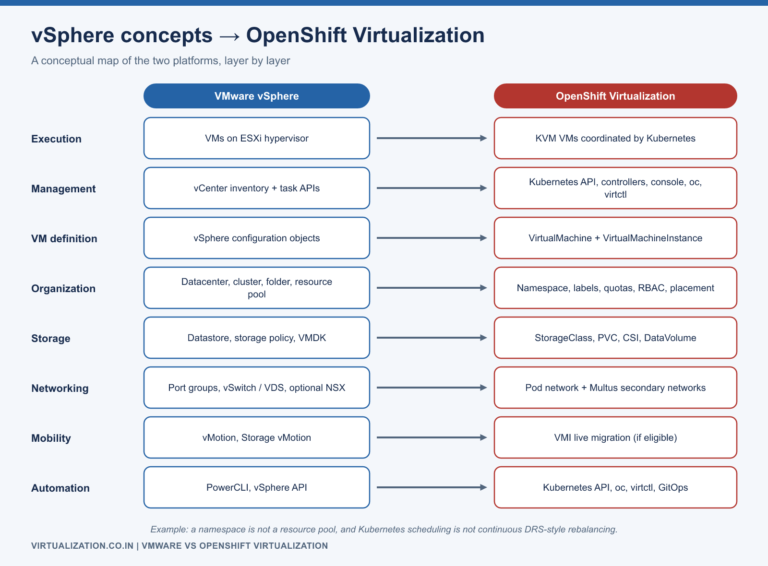 Part 1VMware vs OpenShift Virtualization: Complete Technical ComparisonVMware vSphere vs OpenShift Virtualization compared: architecture, availability, storage, networking, cost and a weighted decision with mandatory gates.
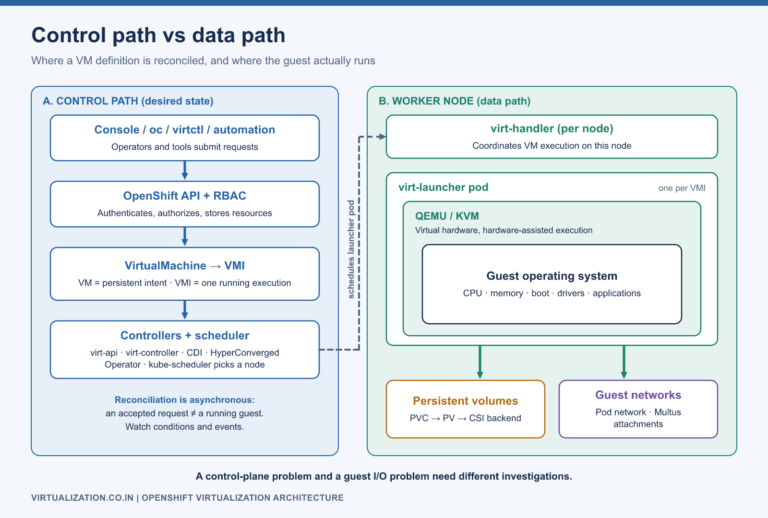 Part 2OpenShift Virtualization Architecture ExplainedOpenShift Virtualization architecture explained: control path vs data path, virt-controller, virt-handler, virt-launcher, QEMU/KVM and failure domains.
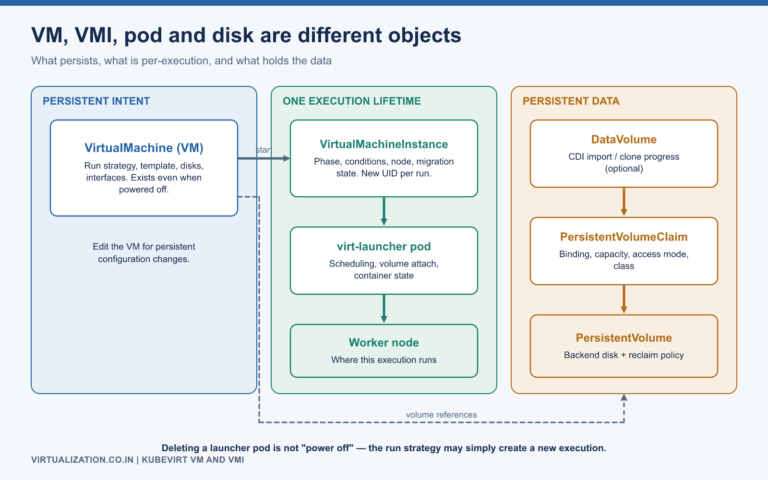 Part 3Understanding KubeVirt, VM and VMIKubeVirt VM vs VMI explained: run strategies, launcher pods, DataVolumes and PVCs, lifecycle states and safe power and deletion practices.
Plan the migration
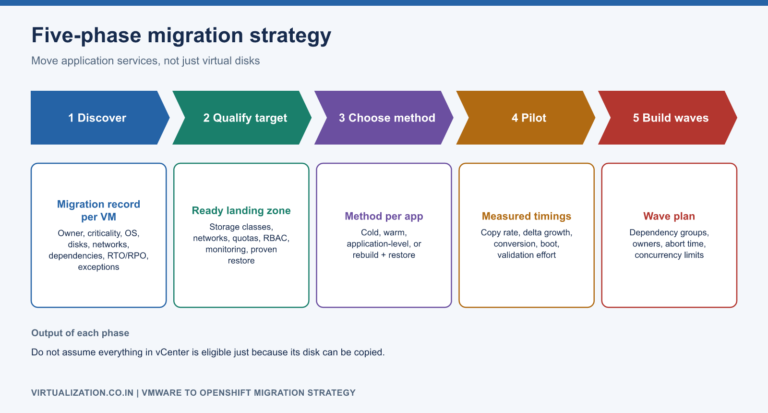 Part 4VMware to OpenShift: Complete Migration StrategyA five-phase VMware to OpenShift migration strategy: discovery, method selection, pilots, dependency-aware waves, cutover timing and rollback.
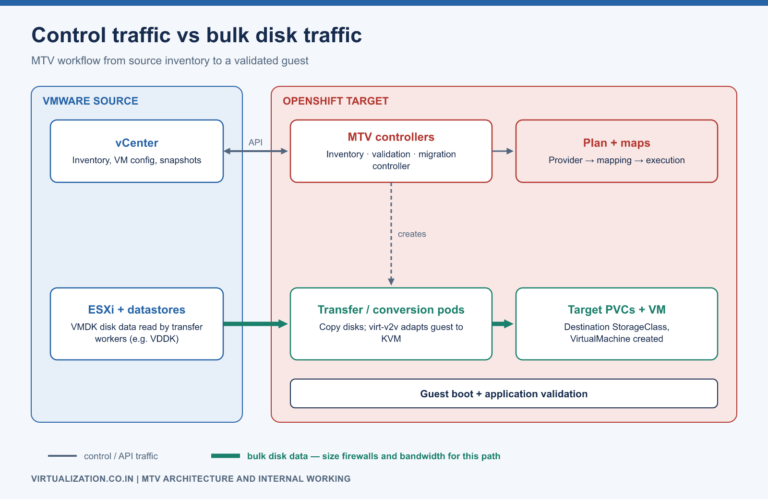 Part 5MTV Architecture and Internal WorkingInside the Migration Toolkit for Virtualization: Providers, maps, Plans and Migrations, cold vs warm execution, and diagnosing failures by stage.
Platform deep dives
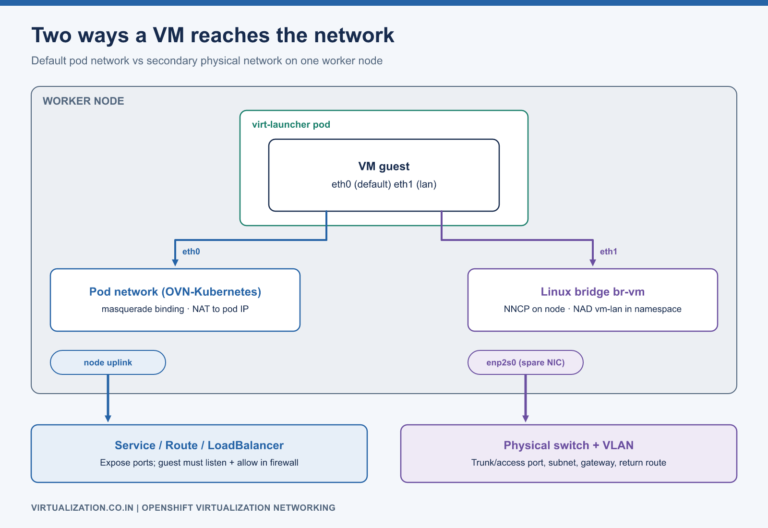 Part 6OpenShift Virtualization Networking Deep DiveOpenShift Virtualization networking: pod network vs secondary Linux bridge, packet paths, NNCP and NAD setup, MTU, IP retention and troubleshooting.
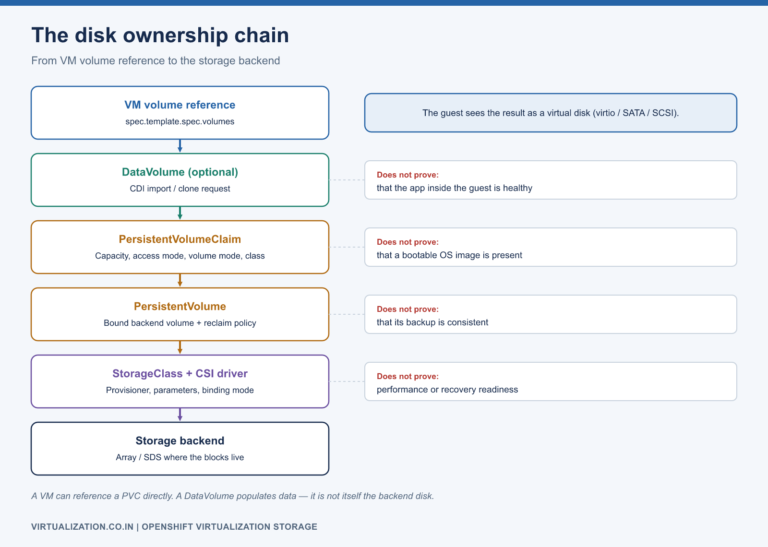 Part 7OpenShift Virtualization Storage Deep DiveOpenShift Virtualization storage explained: DataVolume to PV chain, RWX vs block, capacity planning, performance, snapshots and backups.
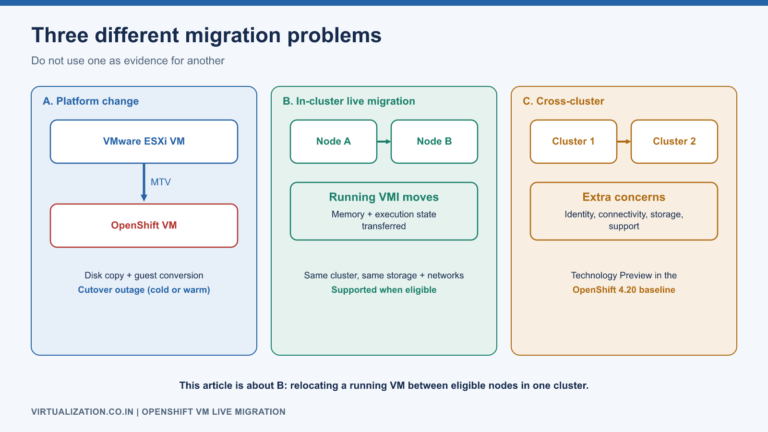 Part 8OpenShift VM Live Migration ExplainedHow OpenShift VM live migration works: pre-copy convergence, eligibility constraints, network and concurrency tuning, post-copy and node drains.
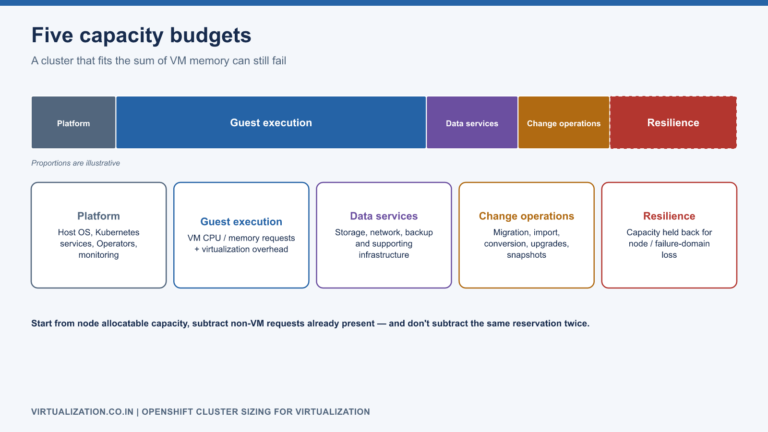 Part 9OpenShift Cluster Sizing for VirtualizationSize an OpenShift Virtualization cluster: five capacity budgets, N+1 memory math, CPU and placement constraints, storage and migration throughput.
Migrate workloads
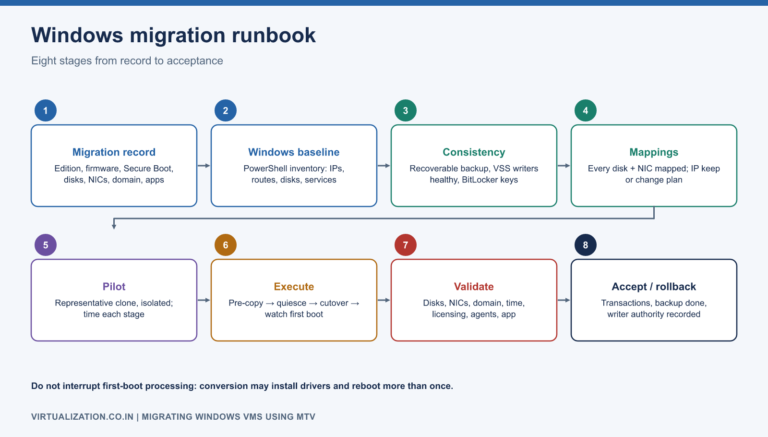 Part 10Migrating Windows VMs Using MTVA Windows VM migration runbook for MTV: baseline inventory, VSS, mappings, warm cutover, first-boot driver installs and post-conversion checks.
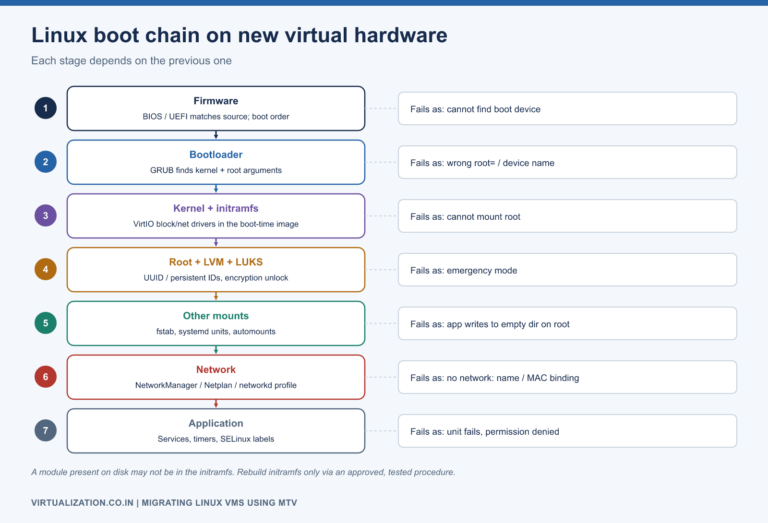 Part 11Migrating Linux VMs Using MTVA Linux VM migration runbook for MTV: guest inventory, VirtIO and initramfs readiness, persistent disk IDs, network profiles and validation.
Automate and operate
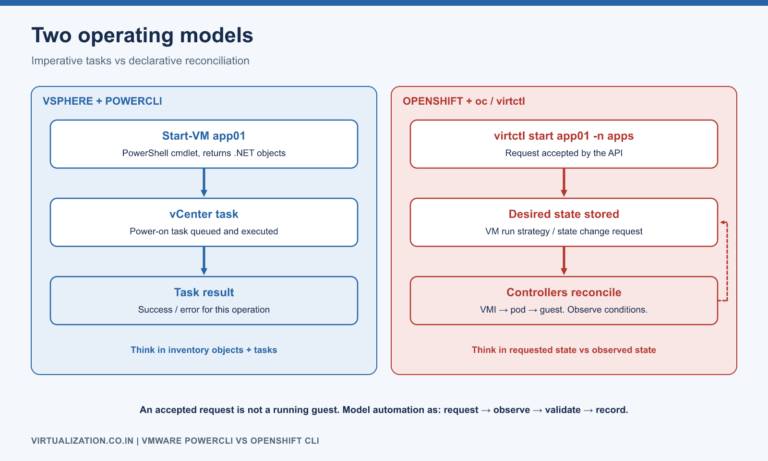 Part 12VMware PowerCLI vs OpenShift CLIMap PowerCLI tasks to oc and virtctl, and learn the declarative model: context, JSON objects, requested vs observed state and safe retries.
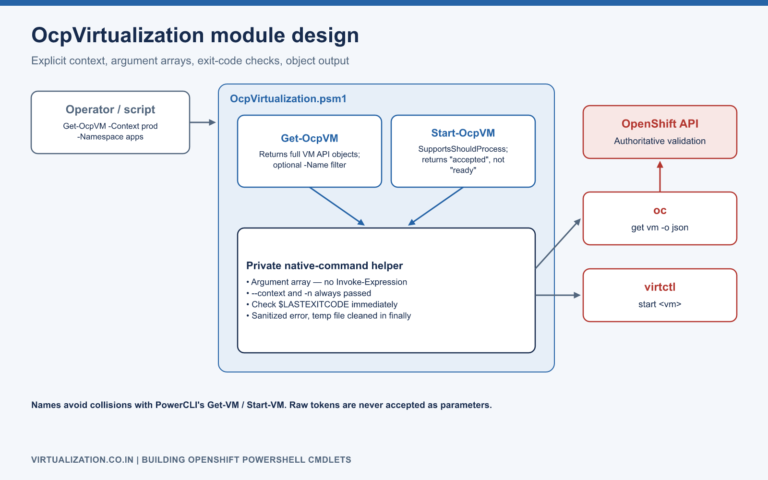 Part 13Building OpenShift PowerShell CmdletsBuild a safe PowerShell module for OpenShift Virtualization with explicit context, exit-code checks, -WhatIf support and Pester tests.
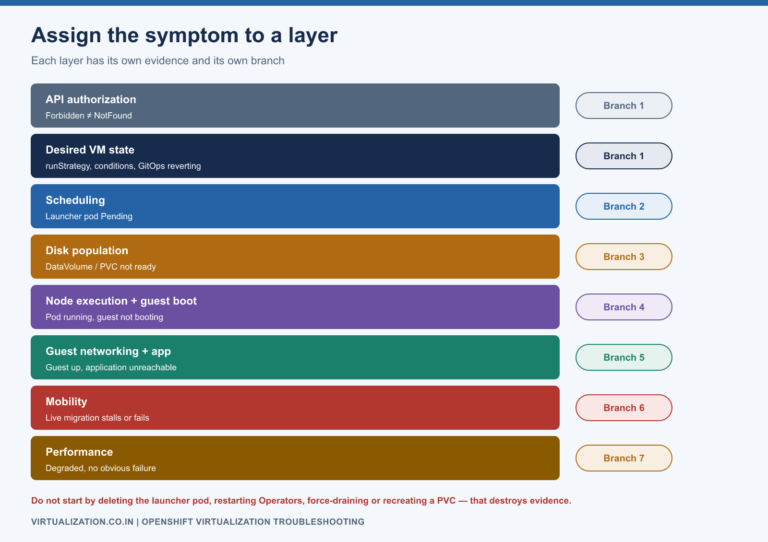 Part 14OpenShift Virtualization Troubleshooting GuideAn evidence-first troubleshooting guide for OpenShift Virtualization: scheduling, DataVolumes, boot failures, networking, live migration and performance.
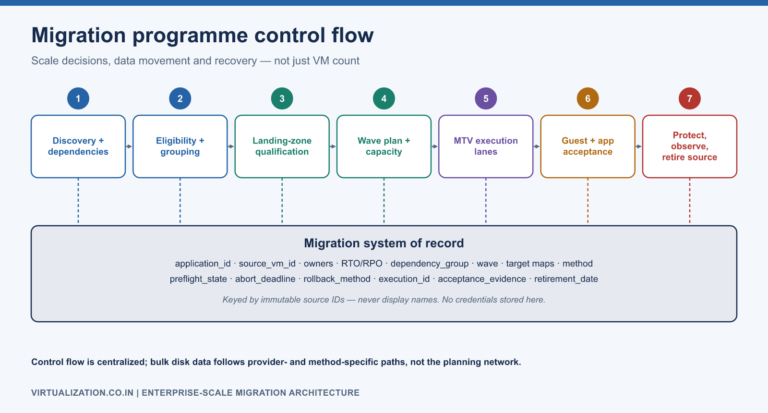 Part 15Enterprise-Scale VMware to OpenShift Migration ArchitectureReference architecture for large VMware-to-OpenShift programmes: landing zones, migration lanes, throughput math, release gates and rollback authority.